
Store operations - 4 min read
By Laurynas - Updated
What Is Dropshipping? Dropshipping vs Warehouse Fulfilment
Dropshipping is an ecommerce fulfilment model where you sell products without keeping those products in your own warehouse. When a customer buys from your store, the order is sent to a supplier. The supplier prepares and ships the item directly to the customer.
Your store is still the customer-facing business. You choose products, create listings, set prices, manage marketing, answer support requests, and handle returns. The difference is that another company holds the inventory and dispatches the parcel.
How dropshipping works
Dropshipping can make it easier to start selling because you do not need to buy every product before you know whether customers want it. However, it does not remove responsibility for the customer experience. If an order is late, damaged, unavailable, or incorrectly shipped, your customer will contact your store.
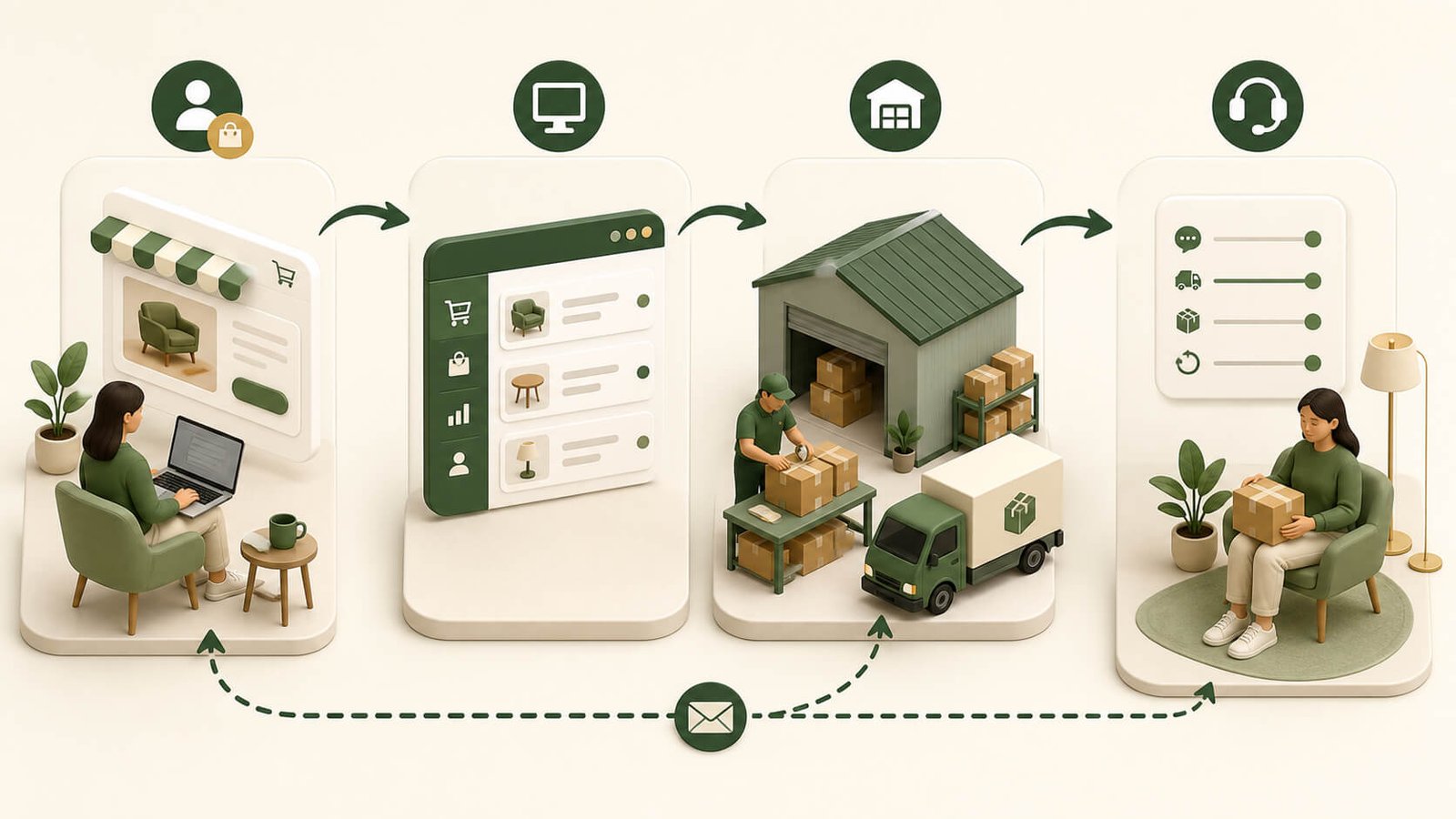
- A customer places an order on your online store.
- You send the order details to your supplier - either manually or through an app or integration.
- The supplier confirms stock, packs the product, and ships it to your customer.
- You provide the order confirmation, tracking communication, customer support, and return policy.
Dropshipping vs warehouse fulfilment
With warehouse fulfilment, you buy inventory before it is sold. You keep it yourself, send it to a fulfilment partner, or use a third-party logistics provider. When an order arrives, your warehouse or fulfilment partner packs and ships it.
Dropshipping usually has lower upfront costs. You do not need to purchase a large quantity of stock before launching. This can be useful when testing a new product, entering a new category, or offering a large catalogue.
Warehouse fulfilment gives you more control. You can check product quality before shipping, use branded packaging, choose delivery partners, and manage stock more accurately. Buying stock in bulk can also improve margins compared with purchasing one item from a supplier after every sale.
The trade-off is risk. If you order too much inventory, your cash is tied up in products that may not sell. You also need space, stock processes, returns handling, and reliable fulfilment operations.
When dropshipping makes sense
Dropshipping can be a good choice when you want to validate demand before investing heavily in inventory. It is often useful for new stores, niche products, seasonal collections, or products with many variants.
Before choosing a supplier, check how often its stock levels update, where it ships from, typical delivery times, packaging quality, return handling, and whether tracking details are sent reliably. Order samples when possible. A product that looks good in a supplier catalogue may not match customer expectations in real life.
Be transparent on product pages. Customers should understand expected delivery times before they place an order. Clear shipping information is especially important when products are dispatched internationally.
When warehouse fulfilment makes sense
Warehouse fulfilment is usually a better fit once you know which products sell consistently. It gives you more control over delivery speed, packaging, stock accuracy, and the overall brand experience.
It is especially valuable when your customers expect fast shipping, when margins are important, or when product quality needs close control. A warehouse model can also make it easier to bundle products, add inserts, offer gifts, and create a more consistent unboxing experience.
A hybrid approach can work well
You do not always have to choose one model forever. Many ecommerce stores use a hybrid approach. They hold stock for proven best-sellers while using dropshipping for new products, long-tail variants, or items with uncertain demand.
The best model is the one that supports the promise you make to customers. Dropshipping offers flexibility and lower upfront risk. Warehouse fulfilment offers more control and often a stronger customer experience.

Written by
Laurynas
- 7+ years with Shopify
- 15+ years in ecommerce
Laurynas has over 15 years of experience in ecommerce, including more than 7 years working with Shopify. He brings that background to his writing about Shopify tools and the everyday decisions involved in running an online store.